Visiting The Farmers With The Tree Tracker App

Today, using the Treetracker App by Greenstand, our tree tracker visited the lands of the farmers who took trees home last week. He geotagged 1000 freshly planted seedlings. You can see them on our map along with the 10,000 tracked last November.

In The Haiti Tree Project, we don’t just geotag our trees, we use the Greenstand Treetracking System to geotag our payments to farmers as well. After our tree tracker photographs all of a farmer’s trees, the farmer receives a receipt that shows their Grower ID and how many trees they are responsible for.

Then they get fair compensation for their service of keeping those trees watered and protected. It’s a system that creates a great demand for tree planting in the community and will quickly help resolve the problem of deforestation here.

The Popular Sed Tree

The indigenous Sed tree, or Spanish Cedar, sheds its seeds at this time every year. It's a very popular tree in Haiti since it grows fast, survives the summer sun well, and gives quality wood. The people request we grow large amounts of this tree every February.

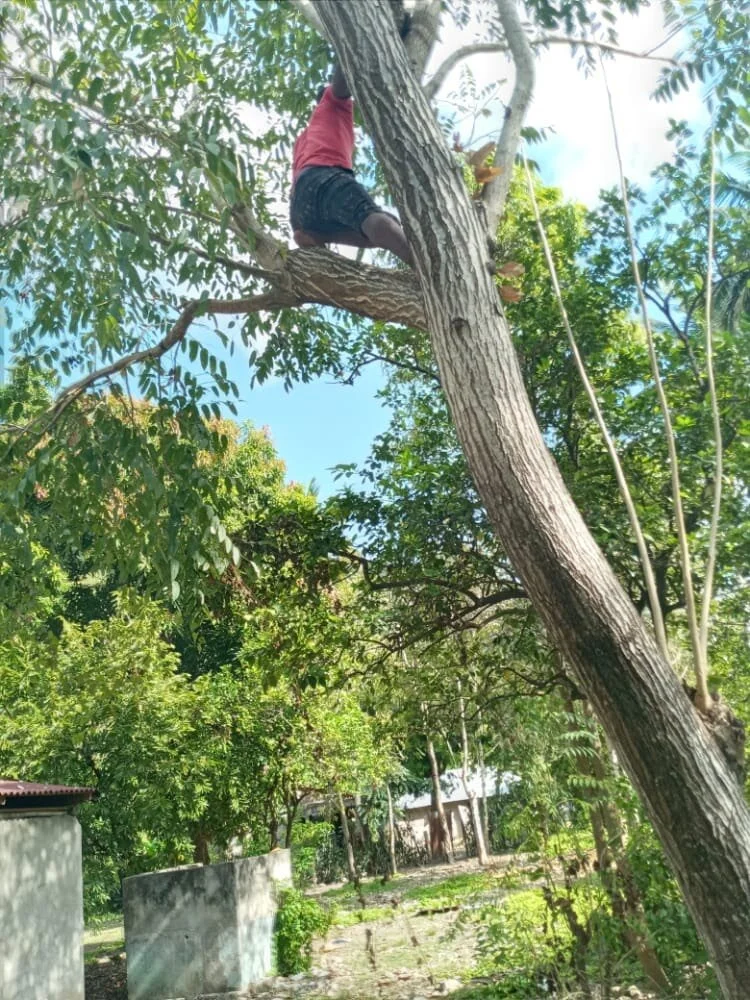
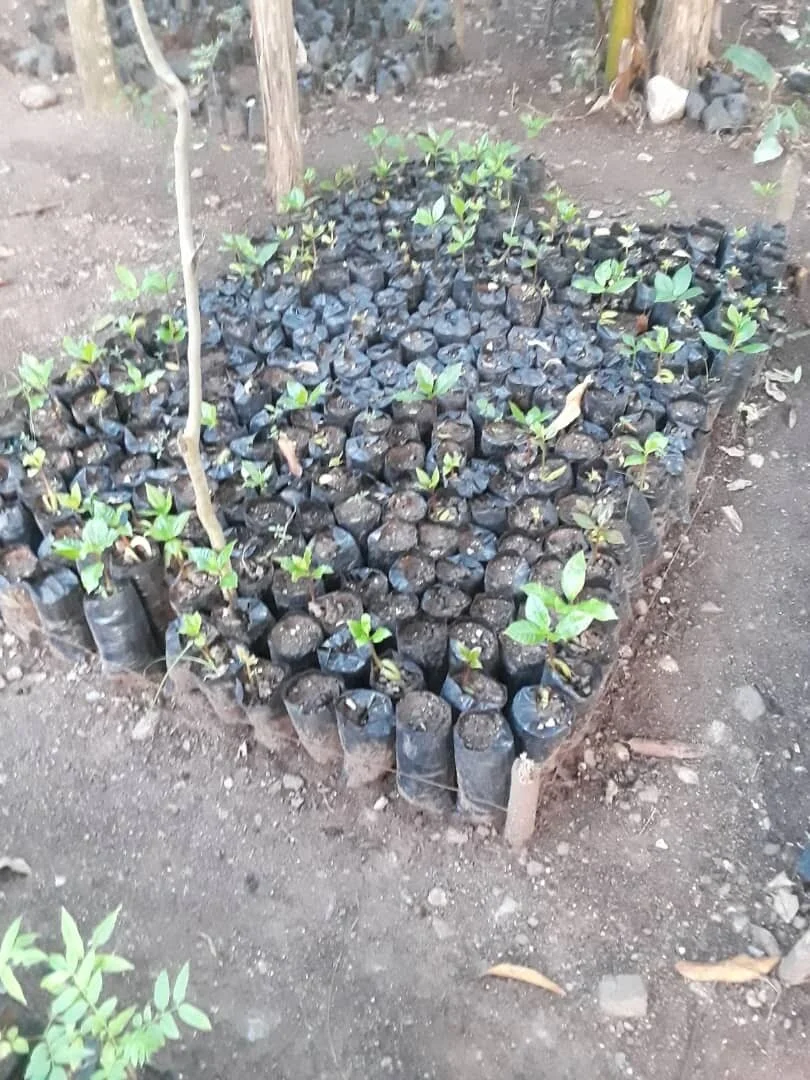
A villager climbed up and shook the seeds off the branches today. Then beat the shell off, picked out the seeds, and mixed them into a bed of soil. They will sprout there and in a couple of weeks be ready to go in seedling bags. Then, by May 1st, the Day of Trees in Haiti, thousands will be ready to go to homes for planting amongst the fruit trees adding diversity to their mini forests.

unnamed (3).jpg
File_001 (2).jpeg

Thanking Our Sponsors

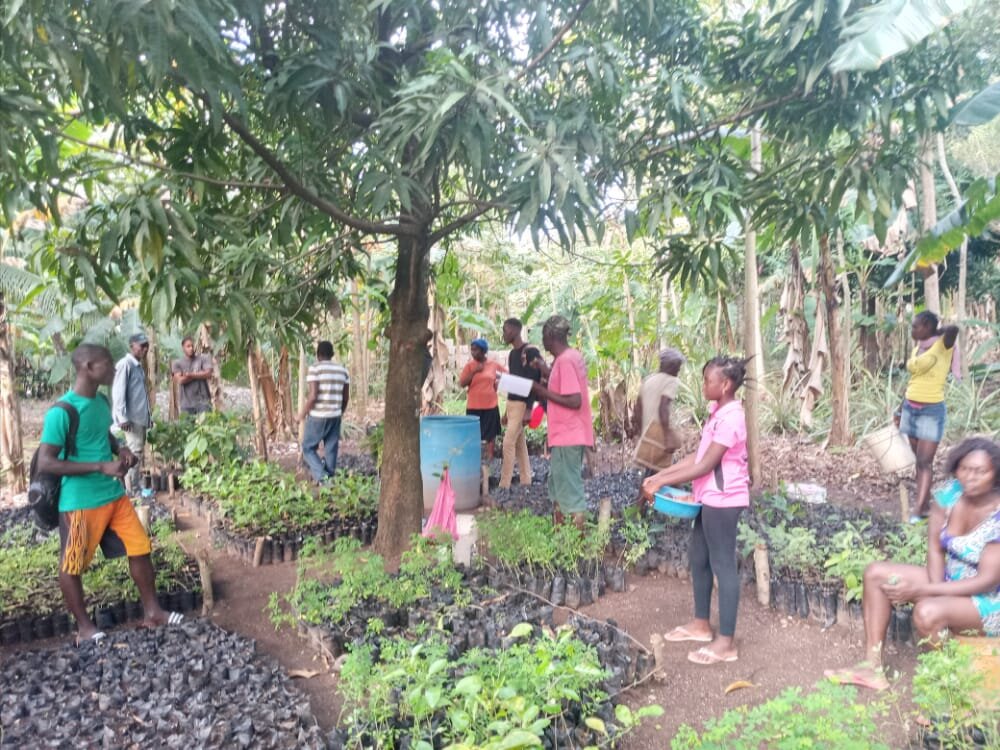
This weekend, like most, people came to take home trees but today they helped thank a couple of our sponsors.

It takes many contributors to grow a tree. Every tree needs months of care in the nursery, before being transported and transplanted. Once these saplings are in the ground, a smallholder farmer must water and protect them from grazing animals for at least 12 months. By the time the tree is a year old, approximately $2 is invested by donors and community members to keep it alive.

File_001 (1).jpeg

Growing Trees with Greenstand Technology

The demand for trees has been high especially after all the recent rains that left the soil soft enough for planting. We were able to give out 13 different kinds of fruit trees today. Only twelve weeks ago community members brought us seeds from their favorite fruits so that we were able to grow the food they love to eat. Now with 10,000 seedlings ready to go home, we will be busy giving out trees through May, the heart of the rainy season.

File_007.jpeg

Severe malnutrition is a problem in this region and growing highly nutritious fruit trees is one great way to ensure food security long term. Here is a list of the trees we are planting now:

  • Avocado

  • Jack Fruit

  • Almond

  • Cashew

  • Tamarind

  • Cacao

  • Corossol

  • Coconut

  • Lime

  • Orange

  • Mango

  • Moringa

  • Sopadillo

File_010.jpg

A Strong Start to the New Year

Thanks to all our supporters in 2020, we were able to grow over 30,000 trees in our Sucrerie nursery, and give them to families in 7 villages around Saint Louis-de-Sud, Haiti. We have tracked 10,000 of those seedlings so far, which can be seen up close on Treetracker.org. Thanks to this tracking new technology from Greenstand.org, we have been able to start compensating farmers who successfully care for their trees! It takes a lot of work to keep young trees alive, and if we can support farmers financially they can grow far more trees than they would be able to otherwise. In the long run, we must continue to invest in education about agroforestry to help farmers create small forests that match the needs of the natural environment and provide the community with food and economic security.   

Greenstand brings transparency to tree planting efforts on Treetracker.org

Greenstand brings transparency to tree planting efforts on Treetracker.org

10,000 Seedlings Growing Thanks to Forest Nation

The nursery currently has around 10,000 trees that will be ready to be distributed to families in either March or April and agroforestry classes will begin. These trees include cashew, moringa, avocado, tamarind, jackfruit, citrus, Wild Sugar Apple, Corossol, and more. Once they are planted, we hope to have funding to add these to the 10,000 we already have on the tree tracker app, so keep an eye out for those new additions!

Thanks in large part to ForestNation, 10,000 seedlings are now growing in our nursery in Henry Sucrerie, Haiti.  We hope to have new contributors soon to help in transport, transplant, and sponsor our farmers in growing these valuable trees.

If you or someone you know would like to sponsor a tree farmer and have their own personal map of the trees they support, contact project director, Karen Nicolas, at TheHaitiTreeProject@gmail.com.

Secured Land For a Second Nursery

We have secured land for a second nursery along the main highway through the southern peninsula of Haiti. On this land, Harvest Wells helped us fund a much needed deep-water well. Not only does this well provide this nursery with water year-round, but it also gives the entire community much needed clean drinking water.

Both nurseries are now able to function year-round and we are looking forward to seeing some major results. With the educators and nursery workers that we have partnered with over the last 10 years, we know we have the capacity to grow 300,000 trees a year and provide ample agroforestry training for the community. Our goal is not only to supply people with valuable fruit trees but also to help farmers reforest mountaintop areas that were cleared mainly for charcoal over the last few decades. It’s in these mountaintops, we must reforest quickly before they become desertified and the irreversible damage makes the land unable to support trees. We are working with agronomists in southern Haiti to find a large variety of indigenous tree seeds for this purpose. While It’s easy to find seeds from fruits in the market, finding indigenous hardwood tree seeds can sometimes only be found in nature preserves with help of experts. 

Clean water for a 7-acre tree nursery and the entire community

Clean water for a 7-acre tree nursery and the entire community

10 Thousand Trees to 1000 Homes in Haiti

We have been busy these past few months, here’s a recap of what we’ve accomplished!

thank-you-eden-tax-and-forestnation.jpg

“Thank you so much for all you have done for the community of Saint Louis de Sud, Haiti. The people from mountain villages all over this region came in May and July to collect the trees they requested and are so thankful for orange, grapefruit, lime, tamarind, mango, breadfruit, Haitian Oak, and Spanish Cedar.

Giving trees to local families is one of the best ways to reforest here. They are growing fruit trees all around their homes for much-needed food and shade. And, when you give to families it’s mostly the children that water the trees and carry the love for them into the next generation. 10,000 trees distributed to approximately 1000 homes. We made a big difference!”

-Karen Nicolas, Director of The Haiti Tree Project

Our History of Events March to August:

March, 2020

So far, 7,000 of 10,000 bags have been filled with soil. They should have all been filled with seeds by last Friday but rain week slowed production. Meanwhile, we distributed the first 2000 trees that were started in February just in time for the rain. Of the 10,000 bags, 5,000 will get hardwood sprouts, mostly Spanish Cedar (bottom picture) this time because they are what’s in nature right now. Enel, our nursery manager, has paid some kids a few coins to collect them off the ground under the trees.

The other 5000 bags of soil will get fruit seeds: tamarind, orange, grapefruit, lime, coconut, mango, cherry, cashew, breadfruit. Enel is buying seeds from individuals rather than from big garden stores. He spreads the word and local people sell him seeds from the fruits they have been eating. Exciting grassroots project!
unnamed (3).jpg

So far we are buying truckloads of dirt and we are also beginning the composting process. It will take a large amount of vegetation and a huge hole to produce what we will need. Some of the fruit trees will stay 6 months in the nursery to reach maturity. Others will be ready to distribute in 2 or 3 months. The community is more than ready to continue filling bags and maintaining a full nursery. Currently, we are preparing the land for maintaining 50,000 trees in the nursery at all times.

preparing-soil-for-the-saplings.jpg

May, 2020

Last weekend for May 1, was the Day of Trees in Haiti. They announced to all surrounding villages to come and get the Sed trees and some of the mature fruit trees from the nursery. Lots of people came trickling in all day maintaining social distancing and taking trees home. Everyone is quite happy about the project. Now, just fruit trees remain since they need more time to grow.

Members of a local organization came to help distribute the trees. Check out their video here. This is what they said:
“We are with the community organization, UGADES, here in Sucrerie. Our job is to find ways to help the local community. Currently, we care for this tree nursery with Enel Cyril. Our objective is to see how we can create vegetation canopy for Saint Louis de Sud.

We have partnered with another larger organization called ORHE, Organization Haitian of the Environment, that is now following our progress. We also have the support of the political leader, Milo Henry, who always gives funding to community projects, like transport for the trees today. He truly wants to make life better for Saint Louis de Sud. So it is our pleasure that we are here today with the hardworking manager Enel Cyril, who runs our community nursery.

Our task now is to transport these trees out to people who live too far to walk with them home and facilitate the betterment of people’s lives. With a better environment, we can live more peacefully.

We are very thankful for everyone out there who is partnering with us to cover our land with trees. Thank you.”

Distribution-may-1-of-sed-and-tamarind.jpg

They have started cutting open 5000 mango seeds to remove the shell from the seed. They will be ready for planting in tree bags starting Monday. They will be filling 1000 bags a day with 6 people working. Meanwhile, Agro Nerva, our chief Agronomist, and motivational speaker is traveling all over collecting mango seeds from his congregation across many villages.

Mango-seeds-for-haiti.jpg

The 5000 bags of soil all got mango seeds. However, some did not survive. We planted tamarind and cashew in those, about 1000 trees.

5000-Mangoes-growing.jpg

July, 2020

The Mango and Tamarind trees looking great! Super popular. All the trees are beginning to be distributed to families all over the villages of Saint Louis de Sud!

delivering-trees-to-haiti-villages.jpg

August

A new partnership formed between The Haiti Tree Project and Haitian native Paul Leger. Paul’s vision matches that of THTP; improve the natural environment, increase food security, and empower the community through agroforestry. With your on-going support, THTP can grow seedlings that Paul’s team can transport up the mountain for his team to plant in the mountaintops of Sucrerie Henry.

7fb91193-1fda-4e56-a1b5-562b7a7d5656.jpg

After the partnership was made, work began on filling 6,000 bags which will later be planted all around Sucrerie Henry, the village where we also have our tree nursery. The dirt used to fill the bags comes from riverbeds of neighboring communities. Due to the heavy rains and unprotected soil on the mountainsides, rushing water erodes away nutritious soil perfect for nurturing seeds. We collect it and bring it to our nursery. Within a week, all the bags are filled and ready for seeds to be planted.

64400c73-00cd-45e9-bf36-82c9e06d91d4.jpg

September

All 6,000 bags filled, seeds are beginning to be planted. Like all our projects, hardwoods and fruit trees requested by the community were planted as we strive to bring back the forests that the elders remember growing up in and restore the natural environment that once flourished.

sed seeds.jpg

One of the trees people love here is Spanish Cedar. These trees grow fast and straight making them a popular tree for natural fencing around cropland because it protects from wind and goats. Here we see the seeds which were dropped by mature trees and later collected off the ground by community members.

Copy of cc74d83c-a344-4f43-8a46-94ae3d8778c9.JPG

The Tamarind and Cashew seeds are already sprouting!

unnamed.jpg

October

Not all seeds are planted directly into the bags. Some seeds, such as avocado and Spanish cedar, are scattered on the pile of rich soil where they sprout and then are transplanted into the seedling’s bags. After a few months, they are transplanted again on the mountain.

unnamed (1).jpg

November

This year’s fall rainy season was unusually heavy, causing a lot of erosion and damage to the environment. Of the 6,000 bags planted, about 2,000 tamarind plants didn’t sprout. Farmers said the seeds rotted. This unexpected and unpredictable weather is exactly what we are trying to mitigate with these forests as they will reduce the strength of the rain when it hits the soil, reducing erosion and providing protection to the communities where they are grown. These unusual weather events are likely a direct result of climate change and it is important that we do what we can to reduce the damage that is being done to the communities that contribute very little to climate change but face the unfair burden of its results.

labapen.JPG

Labapen seeds were used to replace the tamarind seedlings that died from all the rain. These seeds are a common street food in Haiti, they are full of protein and served boiled with salt. They look almost like breadfruit on the outside but Labapen has this nutritious seed. By December, they will be ready to be planted on the mountain.

Avocado and Cashews!

It’s avocado and cashew season in Haiti! People from all over the mountains are eating avocados and bringing us the seeds to plant new trees.

Avocado seed delivery!

Avocado seed delivery!

Cashew seeds in their shells

Cashew seeds in their shells

So many locals now value our reforestation project because they can clearly see the difference it makes.  For example, our Mangoes planted 6 years ago provide an ample supply of fruit for a family all summer and are worth more than 20 cents each in the local market.  (Just to give you an idea, laborers earn about 2.75$ a day).  Because the country is now so deforested, those who have fruit trees have something that is quite valuable, and they know it!  

This week we will be planting and mixture of 6000 avocado, cashew, and Haitian Oak trees.  After two months they will be ready to everyone to take them home and plant them on their own land.  

IMG_1142.jpg