


News
The nursery team is using the roots of the breadfruit trees to grow new trees. Breadfruit doesn't have seeds so they have to be regenerated by the root or stem.
Breadfruit is a staple in the Haitian diet. When breadfruit is in season, It’s very common to have it for breakfast every day, along with Creole sauce. Breadfruit is one of the many trees we are using for agroforestry to mix among the forest trees.


Planting fruit trees near other trees gives them a better chance of survival. Only select tree species can survive the mountain tops with strong sun and poorer soil.
Mostly, we’ve been transplanting sed, mango, cashew, cacao, and tamarind trees. However, we have a thousand fwenn trees growing in the nursery with And many more fwenn seeds dried and waiting to be planted in the nursery.
Fwenn is an amazing indigenous hardwood that can grow quite well in our area, especially high on mountaintops. It’s also a beloved tree by Haitians and has a longer lifespan since grazing animals don’t try to eat it.
With more consistent funding, we’d be able to prioritize growing fween seedlings and plant tens of thousands along with fruit trees all over the local areas.

This landscape of deforested mountain tops is all over our region. If you look into the valley, you see trees and crops. But when you look up, you see rocks and shrubs.
In July, we planted 500-1000 trees on ten different mountains, in seven different localities: Sucrerie, Bon, Kay Pyeline, Coraye, La Parese, La Hatte, and Casa Mayor.
Many of the trees were planted over water springs. But mostly, our trees were planted on mountaintops. Additionally, one group of trees was planted on school grounds as an educational forest to teach students about the importance and lasting impact of reforestation.
We hope to track all of these trees monthly for a full year, using our Treetracker App. Using the app allows us to track the growth of the trees and compensate farmers for each tree they keep alive. Its a pay-to-grow model made possible by the technology of Tree Tracker, and we no longer have to guess if their trees survive.


Farmers in the nearby locality of Bon are planting young trees in the middle of their gardens. The trees give shade, wind block, and soften the rain. All three of these natural effects give crops a better chance of surviving.
Bon is also one of the few places that locals are strict about keeping grazing animals away. Goats and cows are taken daily all over the mountains to find a place to graze. They are normally tied to trees with a long rope. But in the dry season, they are usually set free to find grass, weeds, and shrubs to eat since they don’t get fed hay or grain.
The young trees we plant must be planted in areas that the landowner is committed to keeping grazers away. This is especially important during Haiti’s dry season when men, women, children, farm animals, and wild animals are struggling with hunger.

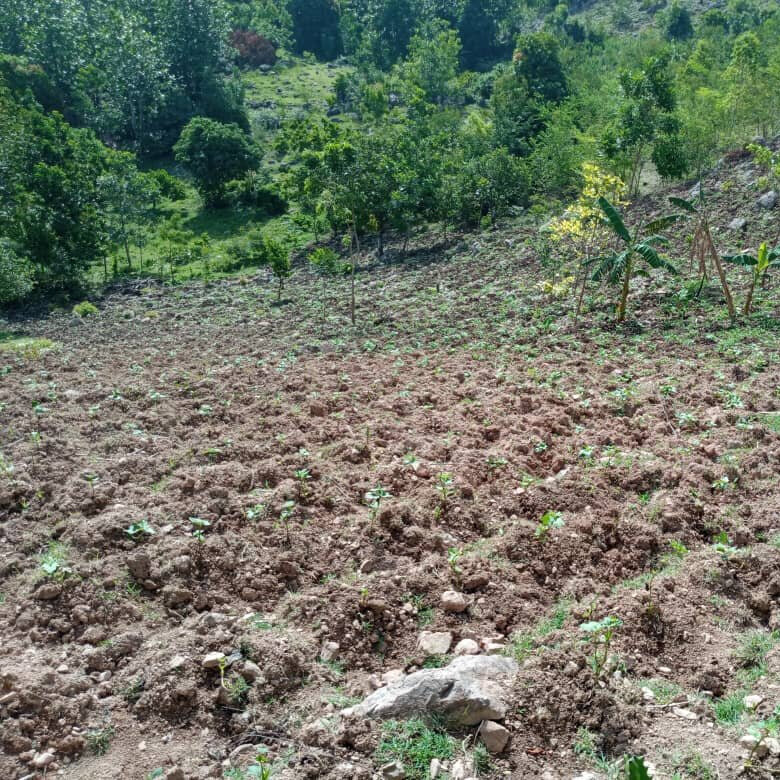
Thanks to website donations, the forest seedlings planted above this water spring and two other mountaintops can be tracked a second time. This gives us both the original and follow-up capture for each tree, allowing us and donors to see their growth over the seasons.
Farmers were compensated for each living tree.
You can see all our newly planted seedlings up close on the Tree Tracker website.

Before we started tracking trees with Greenstand’s Treetracker App, Haitian families and communities took what they could carry and rarely counted the trees they took them home.
This made it challenging for us to know how many trees were being planted. But now that we are following each tree with timestamped and geotagged photos, and compensating growers for keeping each one alive, every single tree is counted before it leaves the nursery.
The value for trees is growing and the regular income for keeping trees alive is a great way to support the community until the trees provide products of their own (fruit, wood, shade, etc).
Today, a large group of families hiked down to the nursery and surprised us with a large request for trees. Over 1,500 trees were delivered to them and nearby communities, and we were able to pay a truck driver $50 to take the families and their trees to the base of the mountain and into their community.
The cost of gas has skyrocketed in Haiti, but through donations, we had enough money in reserve to pay the driver. The families were excited to have a ride, and eagerly clambered onto the vehicle with their trees.
We look forward to keeping track of these trees and supporting and educating these families in keeping these new additions to their community healthy.
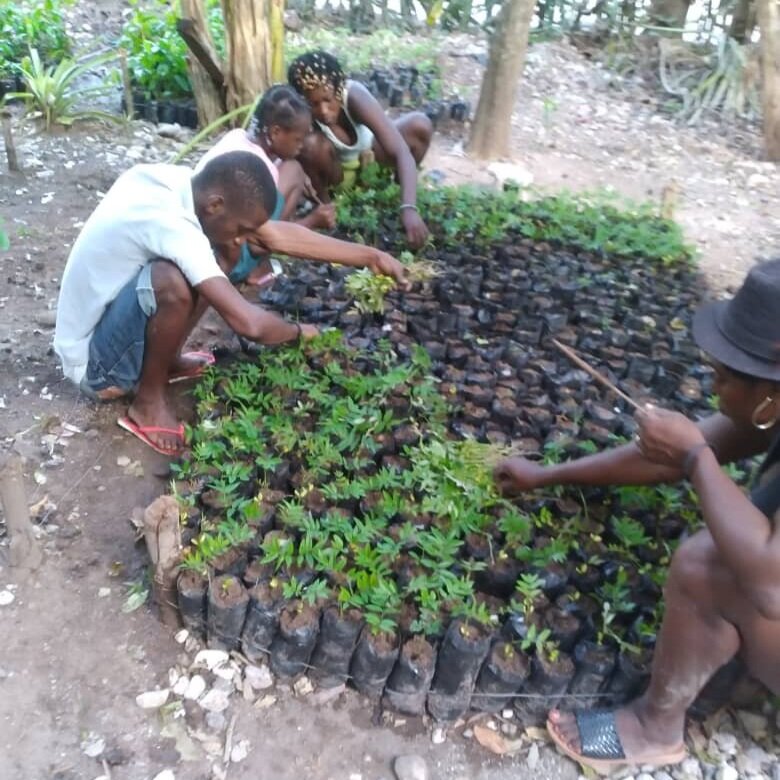

Families from Kay Perilin walked over to the nursery to pick up trees today. They have a long walk back home that includes rough terrain and mountain trails, but that didn’t stop this young lady from dressing up for the occasion.
The villagers of Kay Perilin can see that the land on the mountain tops is quickly becoming a desert. And in order to support reforestation, they took 500 varieties of hardwood and fruit trees home to plant.
Our agronomist visits the new tree growers regularly, encouraging them to put lots of mulch on each newly planted tree to retain its moisture. And since emergencies can happen unexpectedly, he reminds them to call us if they need additional water. Whenever an emergency happens, we reach out to our team to send help.
Like all of The Haiti Tree Project’s work, being able to offer help during unexpected emergencies is done through support from our donors.

The Haiti Tree Project is a 501c-3 charitable organization, registered in the state of North Carolina, USA.
Tax ID: EIN: 46-1012434
© 2024 The Haiti Tree Project
